|
| 商品編號: | DCG8381 |
|
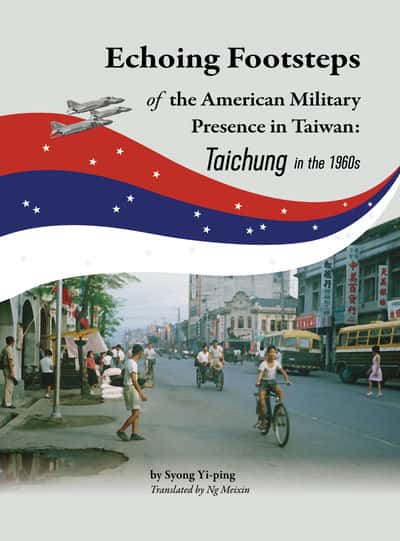
| 商品名稱: | Echoing Footsteps of the American Military Presence in Taiwan:Taichung in the 1960s 出版公司:蔚藍文化 作者:Syong Yi-ping 類型:人文社會-歷史 EPUB電子書 英文版 |
|
| 商品分類: | 人文社會相關電子書 |
|
| 語系版本: | EPUB電子書 英文版 | |
| 運行平台: | EPUB電子書,沒有任何平台限制,終身使用 | |
| 更新日期: | 2026-05-01 |
|
| 光碟片數: | 1片CD光碟 |
|
| 銷售價格: | $100元 |
|
| 熱門標籤: | 人文社會
歷史
1960s
蔚藍文化
Echoing
American
Military
Presence
| |
|


|
Echoing Footsteps of the American Military Presence in Taiwan:Taichung in the 1960s 出版公司:蔚藍文化 作者:Syong Yi-ping 類型:人文社會-歷史 EPUB電子書 英文版
商品資料
作者:Syong Yi-ping
出版社:蔚藍文化
出版年:2025
課程類型:人文社會>歷史
檔案格式:EPUB
書籍簡介
Uncover Taichung’s hidden American past!
“Echoing Footsteps of the American Military Presence in Taiwan” reveals how the US military profoundly shaped Taichung’s urban landscape, culture, music, food, and social fabric from the 1950s to the 1970s.
Explore forgotten stories and iconic sites – a captivating journey through “Little America” in Taiwan.
This groundbreaking book, “Echoing Footsteps of the American Military Presence in Taiwan,” invites readers on an extraordinary journey through time and space, specifically focusing on Taichung’s West District and beyond during the pivotal 1950s, 60s, and 70s. Authored by Syong Yi-ping, this commissioned work delves into the surprisingly pervasive and often hidden influences of the United States military on the city’s historical, cultural, and social landscapes. Many familiar aspects of daily life in Taichung, from architectural styles to popular foods and music genres, have deep roots in this unique historical period, often unbeknownst to contemporary residents.
The narrative begins in 1950, when the outbreak of the Korean War prompted the United States to reposition Taiwan as a critical bulwark against the spread of communism in Asia. This strategic shift led to significant military and economic aid, including the formal establishment of the Military Assistance Advisory Group (MAAG) in 1951 and the deployment of American troops to the island. A key component of this defense strategy was the expansion of Kokan Airport into the Ching Chuan Kang (CCK) Air Base, envisioned as one of the largest US air bases in Asia. This massive undertaking, known as the Yangmingshan Project, involved the expropriation of nearly 1,400 hectares of land and the forced relocation of over 8,000 farmers and traders, through what locals referred to as “soo-khai” – a term for wartime evacuation. John Kmetz, a US Air Force pilot arriving in 1965, initially found CCK to be a “city of tents,” a stark contrast to the vast, modern facility it would soon become, dubbed “Little America”.
As American soldiers, many with families, settled into Taichung from 1963 onwards, they brought elements of American culture that became “virtually ubiquitous” in the city during the 1950s and 1960s. This cultural influx transformed Taichung’s urban fabric. US military quarters, or “US Emigrant Villages,” such as those in Xinbei Village and Tuku Village, were constructed to accommodate American families. These houses, designed by American architects, featured distinctive elements like chimneys, intended to alleviate homesickness and evoke a sense of home for the soldiers, even in subtropical Taiwan. The presence of these unique residences inspired locals to build their own “faux American buildings” – colloquially known as “a-tok-á houses” – which became symbols of wealth and modernity and reshaped Taichung’s architectural landscape. Even today, road names like Meicun Road (“American Village Road”) and Zhongmei Street (“Chinese American Street”) silently narrate this period of profound American influence. Iconic sites like the Meiyi Swimming Pool and Taichung US Army Guest House are direct remnants of this era, preserving memories of American life in the city.
The US presence also profoundly influenced Taichung’s culinary scene. Liu’s Bakery, founded by Liu Zheji, initially catered to US soldiers, introducing “Apple Bread” inspired by military rations and sanitary standards enforced by US medical officers. Similarly, Rose Pie emerged, combining American pie-making techniques with local Taiwanese ingredients. These innovations laid the foundation for Taichung’s modern baking industry.
Beyond daily life, the US military ignited a vibrant entertainment and cultural scene. The Rest and Recuperation (R&R) program for Vietnam-bound US soldiers, beginning in 1965, brought over 210,000 vacationing troops to Taiwan, injecting significant US dollars into the economy. This led to the proliferation of hotels, bars, and clubs along Wuquan Road and Daya Road, transforming the area into Taichung’s bustling “American entertainment street,” often referred to as “Taichung’s Qinhuai River Area”. These venues became the forefront of “hot music” – Western pop music performed by live bands. The CCK Club, officially the Airmen’s Club, located within the air base, became a legendary venue where Taiwanese musicians like Rich Huang, Masa Yhou, Su Rui, and Tracy Huang honed their skills, learning from international artists and adapting to demanding performance standards. The high pay offered at these clubs far exceeded local rates, drawing talented musicians and significantly shaping the nascent Taiwanese music industry.
The United States Information Service (USIS) office in Taichung served as a crucial “window to the outside world” for Taiwanese eager to learn about international news, culture, and art. Its striking “Cultural Exchange” mural by modern painter Shiy De-jinn symbolized its role as a “catalyst for modern art”. The USIS library, with its extensive English collection and air conditioning, became a popular hub for students and teachers like Chi Pang-yuan, who used its resources to introduce texts from US Presidents, poets, and civil rights leaders into Taiwanese education. Moreover, USIS hosted cultural events, from poetry recitals to live broadcasts of US space missions, offering rare opportunities for intellectual engagement under Martial Law and exposing Taiwanese youth to diverse ideas and global advancements.
However, the US presence also had its complexities. The relationships between US soldiers and Taiwanese women, sometimes leading to “hired wives” arrangements and Amerasian children, form another poignant chapter of this history. Figures like Tony Wang, Cheng Chih-lung, and Tammy Darshana Lichtenberg, born of these unions, represent the intricate social fabric of the time, often facing societal prejudice. The Pearl S. Buck Foundation played a role in helping these children, highlighting the human dimension of the military presence.
The book also chronicles the eventual withdrawal of US troops, beginning in the 1970s following shifts in international diplomacy, such as UN Resolution 2758 and President Nixon’s visit to China. This departure left many Taichung locals, whose livelihoods were intertwined with the US military, feeling uncertain. Yet, the legacy of this era adapted and transformed. Former kitchen staff opened American-style restaurants, and “hot music” musicians like Rich Huang and Masa Yhou transitioned into the blossoming Mandopop scene, leveraging their unique training to shape Taiwan’s recording industry.
Today, efforts are underway to preserve these “time capsules” of memory. The Dayang Oil Depot, a massive structure built for the Vietnam War, is now part of a recreation park, symbolizing a once-taboo past transformed into a unique historical attraction. The General Sun Li-jen Memorial Hall, a wooden house mirroring the architectural style of American family homes in Model Village, offers a tangible link to Ian Hideo Levy’s childhood memories. Most significantly, the American Footprint Museum, housed in a former church within CCK Air Base, serves as a testament to the US military presence, showcasing uniforms, equipment, and personal photographs, many contributed by former US soldiers themselves. Although not regularly open to the public, its digital exhibits ensure these vital memories are accessible.
“Echoing Footsteps of the American Military Presence in Taiwan” illuminates a chapter of Taichung’s history that, while deeply integrated into its present, often remains unnoticed. Through painstaking research and compelling narratives, Syong Yi-ping invites readers to discover the profound and enduring cultural heritage left by the American military, ensuring these stories of interconnected lives and transformed landscapes continue to resonate.
章節
Echoing Footsteps of the American Military Presence in Taiwan: Taichung in the 1960sPreface by the Mayor of TaichungRecommendationPrefacePrologue: Model Village- The Search for Model Township
- Return to Model Village
1. Ching Chuan Kang Air Base: The Unbreakable Bonds Between the US Army and Taichung- How the City of Tents Came About
- From Seaport to Mountain Town: The Yangmingshan Project
- Ox Carts at the Air Base
2. Dayang Oil Depot: The Vietnam War and Taichung- A Pit Stop On the Way to Vietnam
- Oil Tank Preservation Efforts
- Dayang Oil Depot—Named after Its Locality
3. US Immigrant Village: American Life in Taichung- American Families, Away from Base
- Santa Claus in Taichung
- US Military Quarters—Which Ones Are the Real Deal?
- The Last US Immigrant Village
4. United States Information Service (USIS): Catalyst for Modern Art on the Streets of Taichung- The USA’s Spiritual Strength
- Beacon of Cultural Exchange
- Chi Pang-yuan’s English Classes
- Bringing The World to Taichung
- American Beauty, Left Behind On the Streets
5. Wuquan Road: American Soldiers, Bar girls, and Amerasian Children- US Soldiers’ Vacations in Taiwan
- The “Qinhuai River Area” of Taichung
- Bar Girls and Hired Wives
- Stories of Amerasians
6. CCK Club: The Forefront of “Hot Music”- The Legendary CCK Club
- CCK Club and Musical Growth
- The Trials of CCK
7. American Footprint Museum: Memories of the US Military in Taichung- Goodbye US, Goodbye Soldiers
- Footprints of the US Military
Epilogue: Life in Taichung in the 1960s Under the Influence of the US Military- Taiwan, Post-US
- The Colors of American Lives in Taichung
- US Military Presence in Taiwan, 70 Years Ago
AfterwordHistorical MilestonesAuthor: Syong Yi-pingTranslator: Ng MeixinEchoing Footsteps of the American Military Presence in Taiwan: Taichung in the 1960s
|
|




 電子書綜合教學