|
| 商品編號: | DCB0001 |
|
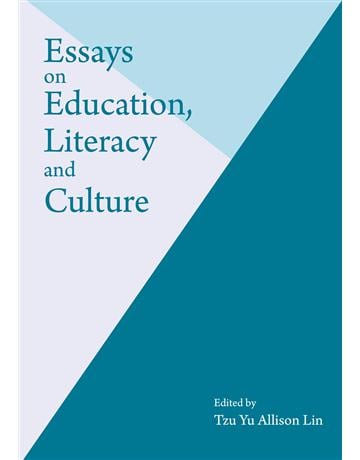
| 商品名稱: | Essays on Education, Literacy and Culture 出版公司:秀威資訊 作者:林孜郁 類型:世界文學 EPUB電子書 英文版 |
|
| 商品分類: | 世界文學、生活風格 |
|
| 語系版本: | 英文版 | |
| 運行平台: | EPUB電子書,沒有任何平台限制,終身使用 | |
| 更新日期: | 2025-09-01 |
|
| 光碟片數: | 1片CD光碟 |
|
| 銷售價格: | $100元 |
|
| 熱門標籤: | 秀威資訊
林孜郁
Essays
Education
Literacy
Culture
| |
|


|
Essays on Education, Literacy and Culture 出版公司:秀威資訊 作者:林孜郁 類型:世界文學 EPUB電子書 英文版
商品資料
作者:林孜郁
出版社:秀威資訊
出版日期:2022-12-27
課程類型:世界文學
ISBN/ISSN:9786267187418
內容簡介
*Introducing key concepts such as religion, humanity, ideology and education through literature in the Turkish context
*Helping the readers to see and to appreciate the insights of scholars from different research areas, especially literature, education, language teaching.
This book is for readers who are interested in education, literacy and culture -- not as separate entities but as an interdisciplinary whole. The contributors in this book, writing in the context of Turkish culture, bring out significant ways of looking at issues such as religion and culture, literature and education, utopia and ideology.作者簡介: Dr. Tzu Yu Allison Lin achieved her PhD with her study of Virginia Woolf and London narratives at Goldsmiths, University of London. Her research interests are visual and verbal representations, literary criticism and language teaching. She has articles and books published in English, including the most recent, The Condition of Language (2021). She is teaching at Gaziantep University, Turkey.
Contributors
Adesanya M. Alabi
Andre Chu-Cheng Shih
Hong Yu Connie Au
Burcu Asilturk
Ahmet ?. Ba?ar
Tzu Yu Allison Lin
Mehmet Sincar
章節試閱
【1 Culture and Religion】 (PARTIAL)
Adesanya M. Alabi
The relationship between Western civilization and Islam has been a very tough ideological issue, debated by many scholars. This issue has always been presented as an opinion rather than using it to bring enlightenment. In many conversational exchanges, everyone feels his or her opinions are the best, while others' are incorrect. Of course, there are going to be disagreements at some point in the knowledge presentation, but the truth is that it does not matter how divergent the ideas might be, there should be a way of enlightening the public space. With regards to this, this study explores the conflict and distinction between Western Civilization and Islam. Thus, due to some problematic issues that revolve around religious violence in recent times; from the cultural frame of reference this conflict has increased rapidly, and Islam seems to have become a scapegoat in the hands of the West.
Talking about the concept of the clash between the Western world and Islam implies that there will be a discussion about the clash that has occurred and, of course, is still occurring between Islam and the West. However, several studies have been carried out regarding this essential but delicate subject, yet there are many aspects of this clash that have not been attended to.
Looking at this concept from a contemporary point of view, one will descry that Islam has become an aunt sally to which every violent ideology is attributed. If we look at what is happening across the globe, some groups of Islam that claim to be fighting for the practice of old Islam have allowed it to become a scapegoat for those who feel or claim Islam is not compatible with Western values and its existence is egregious to global security.
In the media today, there are many examples of extremist groups that have sprung up, and their religious ideologies have egregiously caused a lot of damage to the image of Islam. For this reason, the West has become very concerned with contemporary Islam, and all the pictures they present to the entire world about Islam are negative and damaging to the precept of Islam.
Regarding the clash of civilizations, there have been many postulations by scholars. Many scholars for example, explain many of the problems that the world faces today as a result of conflicts among civilizations (Khan, 2016, p. 2). It would be appropriate to divide the nations based on their civilizations and cultures rather than group them based on their economic and political strength. These "[…] civilizations include Western, Confucian, Japanese, Islamic, Hindu, Slavic-Orthodox, Latin American and possibly African civilizations, of which the conflict between the Christian West and Islam gets the lion's share of his attention" (Khan, 2016, p. 2). In this view, this study explores the contention between the West and Islam -- drawing from their cultural and religious worldviews. The origin of the contention and how the clash has become irresolvable in connection to the conflict between the Christian West and Islam over the years are brought under focus.
Due to the fact that there is an emergence of Islam in the global chronicle, centuries after the inception of Christian faith, there have been many factors that are shaping the Western views about Islam for many years. It has constantly been a critical topic for Western writers. This "issue has been debated within the field of international relations as a myth of the Islamic threat. This traditional approach views Islam as the next real enemy of the post-cold war period" (Baile, 2010, p. 3).
As Islam began to experience success immediately after the Arabs had conquered the Byzantine territories, Spain began to present some religious and political issues to the Christians in which they painted Islam as a religion of violence. Western Christians did not, in the first place, quickly accept the notion that Islam is a starting point of doctrinal contention. Previously, the concept they had of Islam was just the disparity between Christian and Muslim societies, with some cultural and political absorptions. So, Islam was described as a religion with just a mere tribal disparity, and it became a subject of dispute about Christian values.
The western concept of Islam has not been critically proven but has been established based on what they think and feel about Islam. During the mediaeval period, the Christians faced some problems due to the political inadequacies and the inability of the Christians to live up to the standard of their credo concept. Western Christian writers projected Islam as an instrument of violence (Esposito, 2015, p. 1068).
During the crusades, Christian historians called "Saracens" pagans who offered worship to the sun-god and Muhammad instead of identifying them as people who also had a strict belief in monotheism. With the emergence of the Protestant Reformation and the Counter Reformation, Islam's character changed from the way the crusaders portrayed it. This accentuates the digression in theology, false teaching, and corrupt practice -- and this was the similar allegation that Catholics and Protestants leveled against one another. As the period of enlightenment emerged, a new type of Islamic sequence was springing up. This time it was termed irrational, toxic, violent, and unfit to stand with real faith in freedom.
In recent times, the Islamic credo has been described as a tool used to subjugate women, incite radicalism and terrorist behavior. This concept has been primarily attributed to a 20th century Protestant revolution to support literal biblical analysis. This concept continues to develop as Islam begins to go through serious persecution because it is regarded as domineering and violent. According to Western ideology, the image of Western Muslims is seen differently because of political and cultural situations. Before the West expanded itself in the contemporary era, Islamic scholars did not have a broad knowledge of the "Western Other" and also did not have much relationship with their Western neighbors.
As the previous concept of Islam was influenced by bad security system coupled with religious and political problems, the recent concept of Islam on the western border emerged through political versatility and cultural conviction. There are several questions that might come up along the line as this study progresses: How does the Western culture influence the Muslim world? How does the West present and represent Islam? What position does the West place Muslims in the modern world? How does Western culture override eastern-Islamic culture? Has Eurocentric views been an impact on Islamic credo? All these and many more are the questions that might arise in the process of the study. Furthermore, the rationality of Western cultural development and the issue of cross-cultural transposition are core issues in this aspect.
Many countries in the Islamic world that were colonized by Western powers went through some backlash. There were some clashes of identities due to the fact that Islamic societies were not properly represented by the West. There have been many conflicts that have made Islam to be misrepresented over the years. Many articles of faith and interreligious discourses have been written by western scholars that do not accurately represent Islam, and this is where problems begin to emerge and the term Islamphobia begins to generate several topics among western writers. This obsession with identifying the "necessary enemy" or making sense of what will happen in the post-Cold War period can be seen in his work, as well as in Francis Fukuyama's The End of History (Baile, 2010, p. 4). Halliday tries to dispute this concept of creating a "necessary enemy." He postulates that "Western society as a whole and Western capitalism in particular have never needed an enemy in some systemic sense" (Halliday, 1996, p. 113).
The West dominated the Arab World, especially the Middle East and North Africa, and the identity of culture and religion became a serious issue. There has been a serious conflict between the Islamic cultural setting and Western ideology. From this angle, one can identify the conflict between two opposing cultures. Islamic society tries as much as possible to stick to its tradition as it has been written and mandated by the Islamic ordinances and rules. But Western culture is in sharp contrast with Islamic precepts. One crucial point to recognize here is that the West invaded the Islamic world, as they did in other parts of the world, and imposed their ideology upon the people without considering the consequence. This system can be described as one that tends to westernize the invaded territories. In this sense, the issue of trying to dominate and dehumanize the invaded environment has become a crucial issue.
(......)
作者序
【Acknowledgements】
I want to thank Mr. Michael Song, the President of Showwe publishing house (Taipei, Taiwan), for his great support and his encouragement for getting academic writings published in Taiwan. Also, my thanks go to Ms. Irene Cheng, Ms. Lestat Yin, and the whole editorial team of Showwe.
【Preface】
In the Turkish context, how can one see the relations among key concepts such as education, literature and culture? Thinking about Turkey and comparing it to Europe or to Asia, one realises that Turkey is non of them -- and yet, Turkey is also all of them. It represents a vision in a way which it is not specifically inclusive or exclusive. It does not take everything in. But if it takes something in, it gives a new form to that -- and because of that, the way of thinking about education, literature and culture will never be the same.
The current condition is a changeable one -- both in the field of education and in the field of culture. Literature is the mediating force not only between abilities of reading and writing, but also between the self and the world, between the inner reality and its external material environment. The readers of this book will realise and will appreciate the insights that the authors have shown in their writings.
Allison Lin
Gaziantep 2022
目錄
Acknowledgements
Preface
1 Culture and Religion
2 Humanity
3 Ideology
4 Utopia
Contributors
|
|




 電子書綜合教學